
The Irish people are historically hard to silence. Under British colonial rule, the suppression of language and religion did not stifle the people — it drove them underground.
Schools sprung up in the whispering leaves of hedgerows, away from the prying eyes of the authorities. People safeguarded their linguistic heritage. When soldiers tried to beat their language out of them, the Irish learned to code-switch. They camouflaged their conversations on the linguistic battlefield, asserting Irish identity in the face of colonial suppression. This did not change when the battle evolved to be one between the Irish state and the people she governed, when the war was one of sexual politics and freedom of expression. The Irish government should have known, by 1929, that her people could not be silenced or censored.
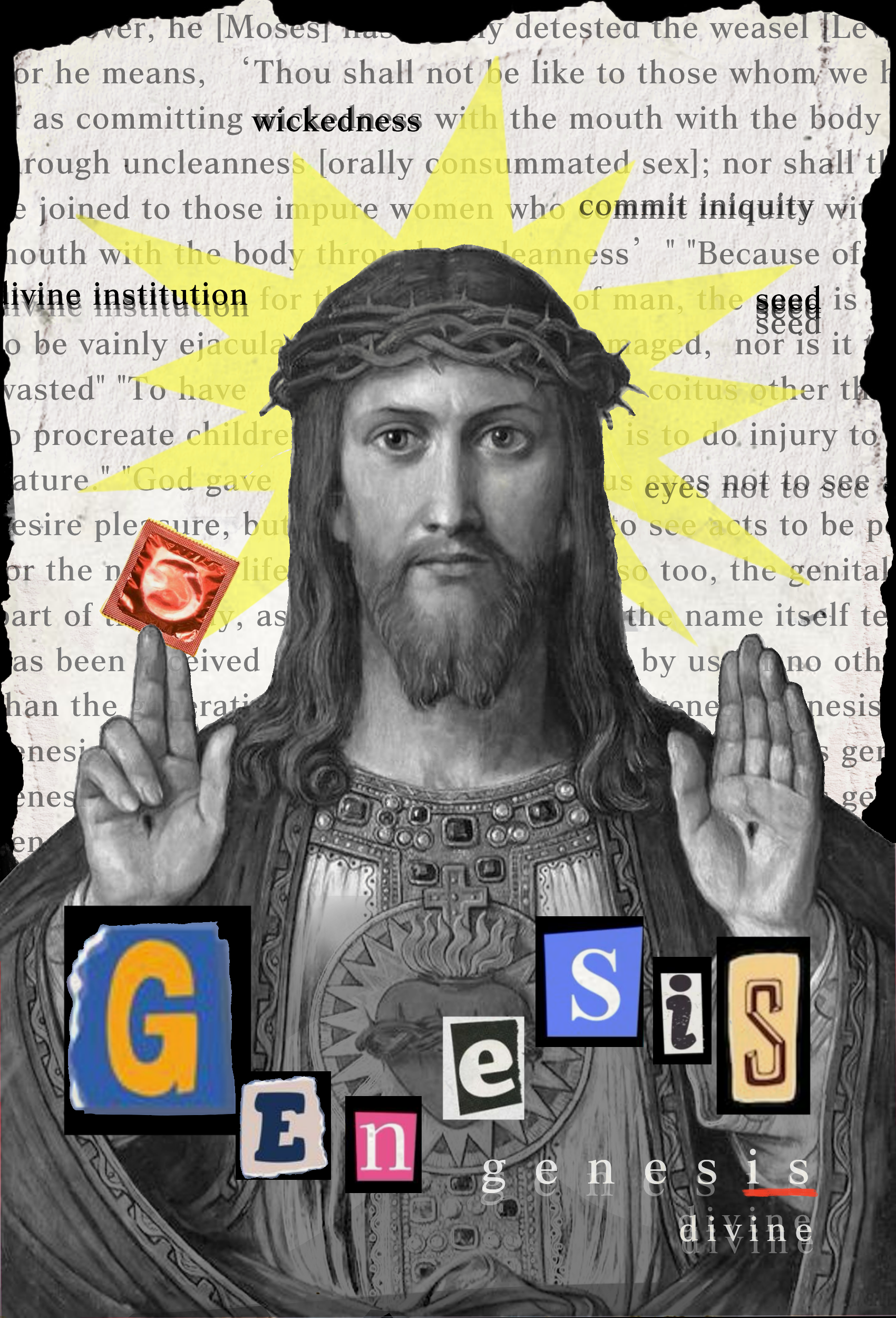
In July of 1929, the Censorship of Publications Act was brought into law. This Act marked a significant juncture in the nation’s history, casting a shadow over the freedom of expression and the preservation of cultural heritage. It declared
It shall not be lawful for any person [to print, publish, or sell] any book or periodical publication (whether appearing on the register of prohibited publications or not) which advocates or which might reasonably be supposed to advocate the unnatural prevention of conception or the procurement of abortion or miscarriage or any method, treatment, or appliance to be used for the purpose of such prevention or such procurement.
The Act put significant strain on media outlets, which faced stringent regulations and oversight. Publications were scrutinised for content that deviated from approved narratives or challenged prevailing social and religious norms; journalists and writers often had to resort to using veiled language or allegory. Newspapers and magazines had to carefully police themselves — before the blacklist was even enacted, David Culbert Boyd, an editor from Waterford, was prosecuted for reporting on a sexual offences crime in a way which was deemed inappropriate by the board. 10 out of the 13 books banned in May of 1930 were birth control books. Such actions reflect the preoccupations of the newly established Irish State. They deemed that there had to be protection put in place against the foreign, corrupting influences seeking to shape the private, political and sexual lives of Irish people, lest the state be engulfed by dirty books and newspapers. In Origins and Legacies of Irish Prudery, Tom Inglis argues that during this period “the level of censorship, both formal and informal, was such that even the mildest suggestion of or allusion to sexual transgression encountered a rhetoric of shock, horror, and outrage.” Understandably, the inverse was true – the censorship of a language of sexuality and freedom in expression provoked outrage in a number of academic and literary circles.
One of the act’s staunchest critics was the author, Samuel Beckett, who was acting as Trinity College’s exchange lecturer with the École Normale Supérieure in Paris when the Act was passed. Beckett spoke out against the Act as early as November 1929 in his largely overlooked and lesser-known dialogue ‘Che Sciagura,’ which was published in Trinity’s own Misc. Magazine. Translating directly to “What a Disaster,” the dialogue’s title is derived from Voltaire’s Candide (1759). The full quotation from Candide “O che sciagura d’essere senza coglioni!” translates to “Oh, the disaster of being without balls!” — a fitting evocation when addressing an audience who have been robbed of their language of sexual expression, or, even, a scathing critique of those without the ‘balls’ to write against the censored state.
The dialogue is one of Beckett’s earliest critical pieces. 1929 was the year he began to publish his work, yet he employs the dialogue form in such a precise and sophisticated manner that it allows him to address issues that were extremely sensitive at the time. In one page, Beckett emphasises the need for subterfuge, and proceeds into a dialogue that is so heavily coded that it could almost fail to serve as criticism depending on whether the reader is familiar with the subject he is discussing – even at that, it is a difficult text to navigate. The dialogue of ‘Che Sciagura’ takes place between two speakers, who initially find it difficult to understand one another. Within the opening lines the first of these speakers asserts that birth control occurs in Ireland, as do conversations surrounding the subject, despite the embargo enforced by the Censorship board, whilst the second speaker simultaneously rejects the notions of birth control occurring and not occurring. The conversation carries on much in this manner, highlighting the tension between societal norms and individual autonomy, as well as the ethical considerations surrounding reproductive rights.
Beckett’s veiled wordplay and symbolism veer from geographical allusions to literary evocations. David Hatch illustrates how Beckett’s itemisation of geographical features in the description, “Abstract the Antrim Road, Carrickarede Island, and the B. & I. boat threading the eyes of the Liffey on Saturday night,” suggests images of “vaginal intercourse.” He explains how, “The island is a small protrusion near Ballintoy on the extreme northeast coast of Ireland; the road follows the curved coast from this area to the Dublin inlet, through which the boat penetrates to enter the Liffey.” The description of the boat’s illicit cargo also suggests a connection between smuggling activities and the transportation of contraceptives.
Within these few lines of dialogue, Beckett also makes reference to his friend and mentor, James Joyce. Beckett met Joyce soon after moving from Dublin to Paris and engaged with his work constantly. In ‘Che Sciagura’ he evokes Joyce’s seminal masterpiece Ulysses, repeating Stephen Dedalus’s pun on the words “elemental” and “genital” from the “Scylla and Charybdis” chapter. Beckett and Joyce had a complex and expansive relationship, with a lot of Beckett’s early writing serving as a reaction to the verbal omnipotence of Joyce. Beckett’s first published criticism was a defence of Finnegan’s Wake which was being published as Work in Progress in Transition Magazine. The essay “Dante… Bruno… Vico… Joyce” praised the text for pushing language to a different kind of limit.
Due to its densely coded language, it has been implied that ‘Che Sciagura’ can not function as an effective criticism – its effectiveness is compromised for those who are unfamiliar with its subject matter. Ruby Cohn, an American theatre scholar and one of the leading authorities on Beckett, observed the ways in which the text “is so opaquely learned that no one thought to censor it from a student newspaper.” The Editorial Subcommittee at Trinity acknowledged this in a later edition of Misc. from March 1930, where they remarked upon the dialogue’s cleverness while expressing relief that it remained “fortunately a trifle obscure for those who do not know their Joyce and their Voltaire.”
‘Che Sciagura’ was not Beckett’s only critique of the Censorship of Publications Act. His antipathy and intolerance towards state censorship are well documented. He was directly impacted by the Act when his first short fiction collection More Pricks Than Kicks (1934) was placed on the “Index of Forbidden Books” in Ireland on 20 October 1934 by the Irish Censorship Board and he continued to denounce Irish censorship, notably in his 1934 essay “Censorship in the Saorstat.” The essay, which was written for the Bookman but not published until 1983, argued that the act was a prime example of “panic legislation,” which sacrificed intellectual freedom and cultural richness in favour of a restrictive conception of morality and national identity. In this essay, Beckett didn’t hold back in criticising the Censorship Act. He labelled it a “slap-up social malfeasance,” arguing that it not only infringed upon intellectual freedom but also blurred the separation between church and state. Beckett saw through the facade of purity that the Act purported to uphold in its vision of Irish identity and made a pointed jab at the romanticised portrayal of rural life, scoffing at the notion that Irish people were too preoccupied with the land to engage with literature. Furthermore, Beckett highlighted the irony and hypocrisy inherent in the Act’s objectives. Whilst it sought to shield Irish readers from explicit material, it paradoxically seemed to endorse reproduction, effectively encouraging the very behaviour it purported to discourage.
When Beckett had established a reputation within the literary sphere he was able to use his works as leverage against censorship boards. Upon learning that Archbishop John McQuaid had influenced the Dublin Theatre Festival’s lineup in 1958 to withdraw stage adaptations of Joyce’s Ulysses and Sean O’Casey’s The Drums of Father Ned, Beckett took action by revoking permission for the Pike Theatre to perform his mimes and All That Fall at the festival. Additionally, he withdrew the theatre’s rights to Endgame. Taking it further, Beckett instated his own ban on his home state, refusing to have his plays performed in the “[prevailing] conditions” in Ireland. He lifted this embargo in 1960.
However, it is significant to look towards where Beckett first gave voice to this discourse, before he was a renowned author. It is impossible to ignore the significance of Beckett – the third of four Irishmen to receive the Nobel Prize in Literature – finding his first platform to express himself and to denounce the hypocrisy of the Irish State in a Trinity College student publication. Hidden in the pages of an oft overlooked student magazine, one of our greatest writers found a way to expose the instability of institutionalised moral borders and to turn the tables on the censor. Too often is student journalism underestimated, and yet there is a fruitful environment for constructive political discourse within the sphere of student publications. Or perhaps it is because they are so overlooked that there is room for this discourse – it allows authors to destroy the very notion of censorship in a state intent on silencing them.

Leave a Reply