On November 2nd, 2004 a little girl was born. My parents thought long and hard about what to name me – I was their first child, so they had to make it count. My dad, being the staunch Shankill man he is, had taken a liking to the idea of my initials being S.A.O.R, the word for ‘free’ in Gaeilge. The ‘O’ and ‘R’ were taken care of thanks to his last name, O’Riordan, and they settled on Sienna Aoibh as my forenames. So, Sienna Aoibh O’Riordan I became. This name may seem entirely ordinary to you as you sit in your Georgian house in Dublin 4 reading this article. But that little girl was not born in Dublin, or indeed anywhere near Ireland. That little girl was born 14 thousand kilometres away, on the southernmost tip of the African continent, in Cape Town, South Africa.
As I grew older, I became aware that my name was not like everybody else’s. In fact, I couldn’t even spell ‘Aoibh’ until I was about nine. Having had no education on the Irish alphabet or its phonetics, it seemed to me an unintelligible mashup of letters that my hippie parents had key-smashed into existence. A kind of proto-Musk statement akin to naming your child X Æ A-12. Perhaps it was just a South African thing? I often called myself ‘Sienna Eve’ to make it easier for the people around me, but also easier for myself. I certainly did not grow up hating my name, but I avoided it. I sometimes styled myself as ‘Sienna Eve Riordan’ because saying, ‘Oh, it’s like Rick Riordan’ was much easier than trying to explain what an apostrophe was to a 2nd grade classmate. Of course, despite my best efforts to explain and simplify my name, people still struggled with it. I spent the first twelve years of my life so used to all the various pronunciations that it was hard at times to even remember the correct one. ‘O-Roar-don’ and ‘O-Ryer-dan’ were often as close as I could hope for. The most outrageous version I heard more often that you might expect was ‘Van Hierden’ — a strange Afrikaans-isation of my name.
My parents did everything they could to make me appreciate my name. When I was seven or eight my father gave me a book of Irish folklore and fairytales. It contained the story of the Children of Lir, in which Queen Aoibh plays a minor role before immediately dying in childbirth. Safe to say I was not overly impressed. It wasn’t until 2016 when my parents announced we were moving to Dublin that I began to appreciate my name. Suddenly my name was not “unique” or “difficult” or “could you spell that please”. I never had to repeat or explain myself, an experience completely new to me but very welcome. I even met some people who had the same last name as me! A concept I had not considered to be a possibility in South Africa: I was not the only O’Riordan!
Reinvigorated by this newfound acceptance of my name, I grew interested in its origins. O Rioghbhardain, meaning ‘Son of the King’s Bard’, eventually became Ó Ríordáin and then O’Riordan. I began to look into colonial history and how British settlers anglicised the male version of Gaelic names, and not the feminine versions. We have no Ni’Riordans in the world, Ní meaning ‘daughter of’. I suddenly found myself caught up in the overwhelming yet invigorating feeling of being connected to something larger and more ancient than myself. All the Ní Ríordáins in the world whose names had been erased – I somehow had a claim or kinship to their lineage, lives and stories. There is so much to be found in someone’s name. Being able to reconnect with such a vast legacy of women, my ancestors, was a profound experience for me as I was entering adulthood and womanhood. However abstract or mystical it sounds, reconnecting with erased female traditions provided great comfort to me.
Today, I am a proud Irishwoman, who goes by both Sienna Aoibh O’Riordan and Sienna Aoibh Ní Ríordáin. In a moment of anti-colonial rage and rebellion, I almost legally changed my name to Ní Ríordáin. However, after considering the sheer amount of paperwork, I settled for tattooing it into my forearm a few days after my eighteenth birthday. It is a great comfort to me to know that I am irrevocably and physically connected to so many Ríordáin women who came before me. Names are powerful entities – entities that women are all too nonchalantly expected to give up. I am aware that just a few years ago, it would have been expected that my name would not always be Sienna Aoibh O’Riordan. Despite changing cultural tides, the vast majority of women still give up their ‘maiden’ names. However, knowing that it will remain on my skin serves as a poignant reminder to me of who I am at my core. Plus, it will be useful if I’m ever ripped limb from limb by a shark and they need to identify my body using only my left forearm.
My journey towards loving my name was long, complicated and rife with spelling mistakes, but I would not want it any other way. We are lucky in Ireland to have such unique and historically-rich names. However, this is true for all names no matter where you are from. Perhaps you are an international student experiencing the exact reverse of my situation, or maybe you have just never given much thought to your name at all. It is such an enriching experience to discover lost traditions; to piece together the stories of the people who shared your blood and name, and lived in order for you to be alive and reading this article right this very moment. A name is one of the most powerful unifying devices we have to these people who are no longer here.
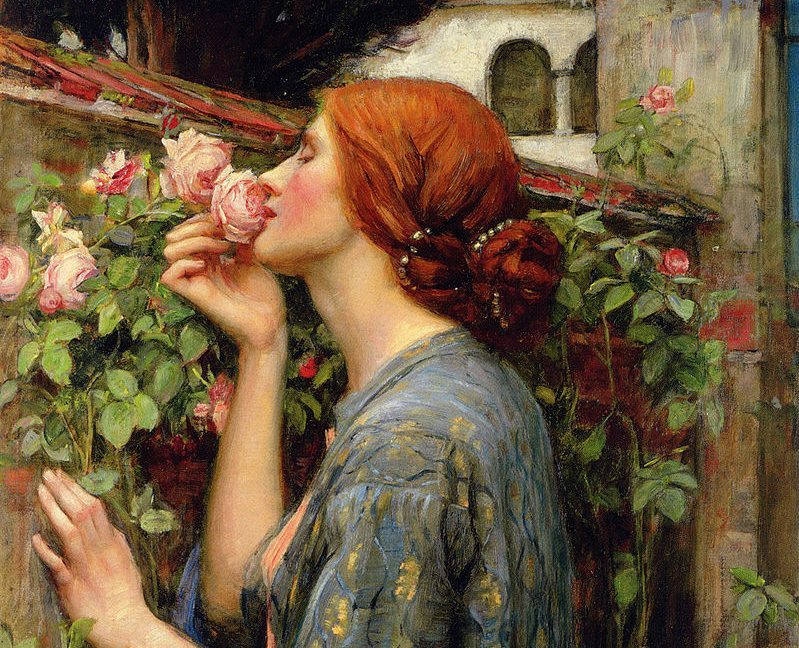
When Shakespeare asked, “what’s in a name?” he suggested that names are mutable and somewhat irrelevant. Romeo could go by any other moniker and Juliet would still love him. I disagree. Names are not merely a device through which we distinguish one person from another, nor a combination of syllables we use to get somebody’s attention. A name is a reminder of the vastness and abundance of the individual human experience, and how we share that experience with each other. It can connect us to our parents, and might be left behind through our children. It is the only part of us that can ever be truly immortal. Whether you know twenty people with the same name as you, or you spend half your life spelling it out and explaining it to people, it is so much more than the letters on your birth certificate or Instagram handle. A name is a part of the fabric of your existence and history. As Philip Levine says in his poem ‘My Name’:
all of me is crowded into that small ‘n’,
my fears, my hopes,
my gleaming memories of the rain,
the tears I never learned to surrender
and the few that fell of their own accord,
the scars on my shoulder,
all my missing teeth…
all of me…
‘the students make the university’
Unknown, 1895. “Ode.” T.C.D: A College Miscellany.

A Rose By Any Other Name

Leave a Reply