
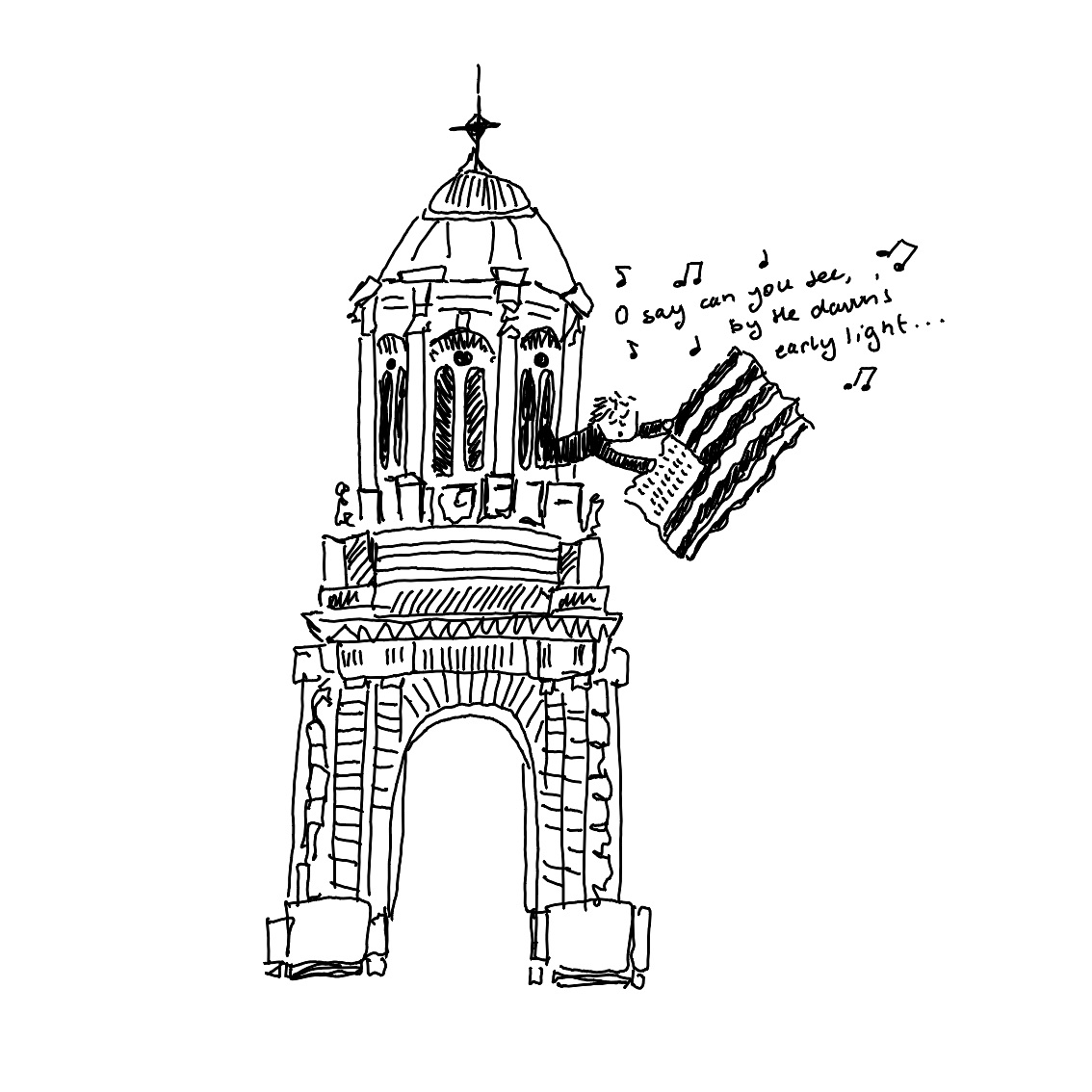
“Oh, you’re going to Trinity, like in Connecticut?”
“No, Trinity College Dublin. Like Dublin.”
Cue blank look.
“Like Ireland … in Europe.”
Hold for 5 seconds of processing.
“Oh wow, that’s so exciting! Do you come back in the spring then?”
“No, I’m there for all four years. Full undergrad.”
Awkward laugh.
“Wow … good for you!”
At this point, conversation would stall with the adult in question. Despite more than two years of college conversation practice on my end and at least twenty on theirs, they’d have very little follow-up on such a foreign concept. College … abroad? Who’d ever go for such a thing when there’s at least five notable universities outside my front door?
I grew up in metropolitan Boston, just down the road from colleges like Harvard, MIT and Tufts. The high school I went to was an extension of Boston University, and many of my classmates would end up matriculating there. So, why the ‘Harvard of Ireland’, you might ask? Well, for one, I didn’t get into the Harvard of Boston (apologies, I mean Cambridge).
In the US, where you go to college is often treated as a be-all-end-all. It is a rite of passage, it is birth, it is a death sentence. It is, as is the country itself, an industry and a business, with you placed squarely as the consumer. You’re taught that the best school is the one with the highest price tag and that the school mascot is to mean more to you than your pet at home. From the minute you enter high school you’re thrown into what feels like a perpetual vortex — the only words you hear are those like ‘acceptance rate’, ‘GPA’ and ‘early decision,’ and your hobbies become a necessary ticket into your ‘dream’ school. A comparison can surely be made between the SATs and the Leaving Cert, or the difference between getting into a school in your lesser acknowledged county and Trinity. The desire to study at a particular university and competition for a place there is still palpable for many in Ireland. But there doesn’t seem to be that commodification of self that is so demanded by US college culture – no one begs you to condense your entire selfhood into your three most important interests and a 600 word essay.
The difference persists beyond the application and acceptance process. Trinity doesn’t necessarily have the same reputation where I’m from as it does here. Here, we’re all pretentious pricks regardless of our creed, but when I’m at home I face only those blank looks and clarifications that I’m not, in fact, going to the only Trinity they know – the one just north of my state. I vividly remember how my father’s face fell when he read that Trinity’s acceptance rate, which was around 33% at the time, was higher than the other schools I’d gotten into. My explanation that “they don’t really consider acceptance rates there” then fell on deaf ears. Where, at home, a low acceptance rate is often taken as a badge of honor, I had trouble even locating Trinity’s, and am yet to find a person here who cares.
The story of my ending up here changes with each person I tell it to. Sometimes I stick with a simple “it was the cheapest option”. In other cases, when I deem them a like-minded person, I might tell them the reason closer to the truth. My initial application, I’ll confide, was a gag based on Normal People that included sentences like “I want to meet the Connell to my Marianne and have a fraught but perfect love story with the backdrop of a dreary-yet-charming Irish atmosphere.” Can you tell 16 year old me was a self-identified femcel?
Now, nearing the end of my second year, I’ve started to reflect on my time here. On whether or not my expectations have been met, if I’m happy, if I would’ve been better off staying home. I’ve been intensely curious about the experiences of others – obviously, the Instagram posts of RyanAir sponsored trips, groups of smiling girls in some random Kavanagh Court kitchen, and perfectly curated photo-dumps are not good indicators of how people are truly feeling … right? I know I tend to err on the side of cynicism, but are none of my fellow Americans really not regretting one bit how they’ve forsaken the ‘darties’ of the US for the questionable club nights of Dublin? Or the vapes for the cigs? Are we all just pretending this is our new normal, or has it really become this? Am I the only one who, with every iteration of my ‘journey to Trinity’ story, has begun to forget why I came here in the first place?
This realisation of mine, that my path to and from Trinity has become muddled and opaque, has brought me to examine the apparent yank takeover of Trinity. Most of the Irish seem to enjoy a COVID appropriate distance from us, which the campus’ foremost gossip Instagram account, Tringe, has made so incredibly apparent. So, it seems up to me to take up the mantle and take out the microscope. Who are these people who’ve ventured outside the “rah-rah” US bubble, these trailblazing creatures who were brave enough to go abroad but not so brave as to actually learn a new language?
There are certain stereotypes of Americans you may encounter at College Green. There are those obsessed with Normal People and the ‘Irish’ aesthetic. Their graduation caps might’ve been green and adorned with Irish celebrities from Andrew Scott to Paul Mescal to Ayo Edibiri. A small subsect of this are the Gaeilge-boos, who are obsessed with the Irish more in a historical, Samuel Beckett, Tiocfaidh ár lá kind of way – like my flatmate who hails from New York, New York but can do a ‘mind yourself now’ with the very best of them.
Then, there are those who refuse to read Normal People on principle for fear of being perceived as anything like the former. There are the ones who sound like they’re from the Bay Area of California only to greet you with a: “Hi, I’m Caoimhe Ní Shúilleabháin”, at which point you realise they’re here because of family connections. A large population of Bostonians resides here, which is likely to do with our ‘Irish’ roots and generally Irish imported culture. There’s the dual BA students between TCD and Columbia, which … well, it may be better to keep mum on that front. I’d prefer not to skyrocket their egos any more … I kid, I appreciate you all, my fair weather friends. There’s the majority of arts blockers who just had to be different and esoteric and, as vaguely aimless young adults, I really don’t think we can malign them (me?) for it. Most of the rest (STEM students) are here for genuinely practical reasons — affordability, programme length, Linda Doyle’s love of our fees. Of course, the stereotypes are endless and the reasons for our arrival range from the sensible to the impossibly enigmatic (something about Mother Éire calling all the English majors here?).
As for me, I may or may not be an amalgam of these types, and I’ll add that my acute disdain for ‘Greek’ culture was genuinely enough to push me across the Atlantic — I happily had my fill at the Phil’s ironic ‘Frat’ theme for their annual ball. My expectations, though, are another case entirely. While I can give reasons as to why I left, I’m finding it much harder to figure out what it is that I expected once I got here, and whether or not those hopeful, anticipatory feelings of change and blossoming I had have been fulfilled thus far.
At this point, unfortunately, my ruminations and pontifications must give way to other people’s opinions. Almost everyone I spoke to admitted that they’d never visited Ireland before coming and had done very little research beforehand, so expectations were simultaneously high and nonexistent. God help us, honestly. My flatmate, Olivia Tranguch, who had seen little of Dublin prior to arriving here, but who had loved Cork and Galway, experienced an unwelcome shock, one she’s still grappling with. “When I first got here, I thought to myself: Oh Jesus, what have I done? Is this what I wanted? It’s a great sense of loneliness when you move away from home and the place that you visited isn’t the same as living there and actually interacting with the everyday people […] You don’t really have the time to romanticise it.” Another student, Clara Breen, relatedly remarked, “The comfort of home is so precious to so many people and impossible to replicate in any building with Yugo slapped on the side of it”. In some cases, it seems, no amount of research may be able to prepare one for the realities of living abroad in a foreign city, far from the place you call ‘home’.
In a similar vein, my other flatmate, Tessa Hanecak, had this to say: “Being abroad has the highest highs and the lowest lows. I think that’s what’s really interesting about it, and you have to decide if the lows are worth it. Also shitty grocery stores. Unironically hate them.” I’ll take the depressing slog through Lidl if it means my groceries aren’t comically priced, but I will have to admit that I too miss the whimsy of my local Trader Joes.
In all of my conversations with other Americans about hopes dashed and dreams made real, I’ve realised the sophisters had much more to say on the matter. It seems, once the newness and overwhelm wears off — and some much needed time and space is given from fresher’s blackouts at Doyle’s — it is much easier to see this whole abroad thing from both a more loving and cynical lens. I received many positive observations on the environment, such as the slower pace, techno-centric clubs, and a newfound appreciation for “sunny days, rare in the depths of winter”. Equally noted was an appreciation for the grounding lessons made possible by living under a different political system. Amelia Rosevear noted that, “moving to a place with a handful of its own issues (though comparing apples to oranges in any case) makes one cautious about idealizing a place just because it isn’t your home, and also more reason to be educated about the fabric and realities of the place you are living in.” The Americans are leaving for Ireland, but the Irish all seem to be leaving for Australia. It does make one question: when is it truly worth abandoning ship?
My earlier postulation, that there may be some — for lack of a better phrase — fear of missing out (FOMO), was also proven to be true, with Clara noting that “living in a dorm, Greek life, huge culture around sports teams is depicted as a universal experience, which it isn’t, nothing is. But as an 18 year old three thousand miles away from your entire life, you really feel like you’re missing out on something huge. Having friends attending colleges that I got rejected from really rubbed salt in the wound, I felt like I was locked out of their world and it was my fault.” While those feelings eventually, for most at least, do dissipate, it’s difficult to not compare your journey with others and to wonder about what could’ve been.
Perhaps the most common thread in these conversations though, was that of feeling discomfort and unease with our American identities. As recognised by Lucy Jurevic, there’s “definitely a stereotype of Americans that they are loud, dumb, annoying, always the ones to speak in class, and are always traveling to other places in Europe […] I’ve definitely felt at times that my thoughts and opinions were not valued as much as my Irish peers, and yes, I’m one to speak up in class, often because no one else will speak up […] I am extremely conscious about my being American here, despite the huge number of American students at Trinity”. She then detailed to me the many ignorant and unkind comments made at the expense of her American-ness. Likewise, Amelia also conveyed that her “American-ness has informed my experience through my active avoidance of trying to be perceived as the stereotypical American” and even Clara, who is Irish born (and partly raised), felt the need to “escape my American identity as much as I could. Because I spent ten years here, my Irish accent quickly resurfaced and if anyone asked me, I was from Mayo but live in New York City.” The state of American politics since November 2024 has certainly added another dimension to our image here — now, more than ever, I receive a unique mixture of pity, concern, and confusion when I say that not only am I American, but I am also studying political science. The icing on the cake of doom and despair.
I understand, though, that in the grand scheme of things, unpleasant interactions can hardly be compared to actual instances of harassment and racism that have been on the rise in Dublin and beyond. However, they seem to aid in my broader quest of understanding the yank ‘takeover’. Ultimately, this observation has been made to circle back to my overarching questions — What am I doing here? What are we all, collectively, doing here? The Irish would also love to know! We seem to be coming in droves with no chance of stopping soon and may even start clinging to a political refugee status (thank you Mr. President!). Most of us are actually here for valid reasons, and despite the occasionally insensitive remarks — seriously, US politics are not an appropriate thing to treat flippantly — we’re here to stay.
I’m still not quite sure why I’m here. Maybe I could’ve had a great time if I’d stayed home, dyed my hair blonde and built my way up the ranks of Alpha Delta Pi, but I could’ve equally found myself in a similar state of aimlessness and malaise. Such is the plight of the young adult. Even in the face of homesickness, FOMO, and the weary adjustment to the grocery stores, the ‘high highs’ may just be worth the seemingly endless shuffles across the pond and back. For now, I take comfort in knowing I’m not alone, that my experience is shared, and that, despite all odds, I may eventually come to also enjoy those god-awful sounds they call “techno” at Pav Fridays.

Leave a Reply