
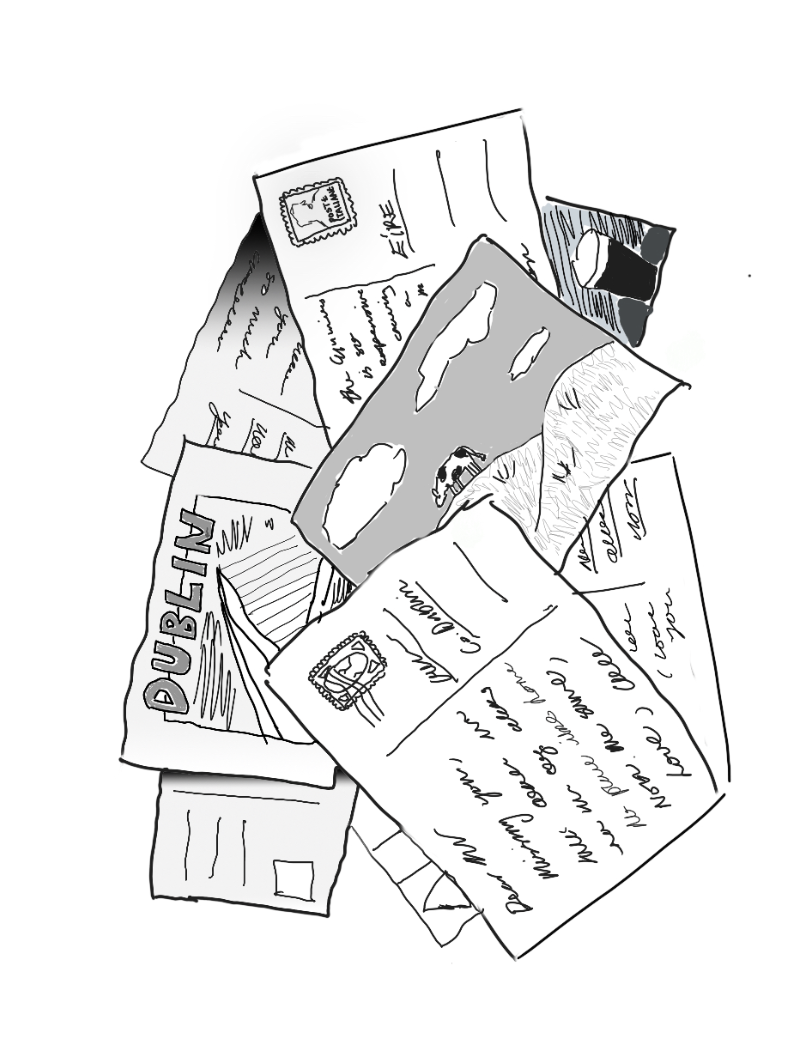
In 2023, Trinity College Dublin was ranked the 16th most international university in the world. Moreover, Trinity’s website adds that, as of 2021, there were a total of 116 countries roaming freely around campus.
What draws so many people from all over the world to merry little Ireland? This concept is compelling considering the amount of Irish people that emigrate from Ireland to make a life elsewhere. Why is a country historically synonymous with emigration and diaspora now becoming a haven for many young people all over the world? To shed some light on the question, we spoke to two kind and willing international students to offer their experiences,
Eliana was brought to Ireland in a whirlwind. All she knew was she did not want to go to college in the south of the US; she chose Ireland ‘because it was English speaking but not England’. She adds that she did choose Trinity because of its reputation.
Sibilla too came to Ireland because it was the choice that espoused her needs best: ‘‘It is convenient for EU students to apply for higher education here as the cost is almost the same as in other EU countries. I can say that I came to Ireland because I was looking to move to an anglophone, affordable country.’ This last sentence is key: Ireland is an anglophone country and offers affordable tuition – at least more affordable than the UK, which is what Eliana said as well. So, those two features (language and affordability) are enough to consider Ireland as your home for a more or less long time. However, is this enough to make people stay? Is Ireland, ultimately, the final port, or a bridge to somewhere else?
Sibilla feels the strongest on this. After having been here for only a month, she says:‘I am now more open to the possibility of staying here in the future. […] the idea of living in Ireland indefinitely is growing on me.’ On the question of romanticisation, Sibilla thinks Ireland is being ‘rightfully romanticised – It is a fascinatingly beautiful country with a complex history and diverse environment.’, adding that she believes ‘the international spread of this romanticisation is mainly due to us international students’, who ‘spread word of the Irish experience first-hand’. Her point of view, of course, is in respect of whether she found what she expected to find once coming to Ireland: and her reply is yes, and even more so.
Eliana is a bit more disillusioned, but still overall agrees on the enticing power Ireland has. In her own words, ‘parts of Ireland are […] accurately portrayed, but there definitely is some romanticism.’ On the role of international students in the romanticisation of Ireland, Eliana has a broader take than Sibilla’s. ‘I think [romanticisation] does benefit Ireland in some ways like increasing tourism’, she continues, although she then admits that she sees how this increase in tourism and movement towards Ireland might not be all roses. Eliana also tries to analyse how Ireland’s romanticisation affects those who didn’t choose to be born here.
Ireland’s long story of emigration hasn’t reached an end yet. How is it that, while the beauties of Ireland have attracted so many from abroad to move here, they have not been enough to make Irish-borns stay?
As Irish student Sophia O’Neill put it, emigration is “rooted in the [Irish] gene since the famine”. To say that the emigration of Irish people will cause the Irish identity to become muted could not be further from the truth. If there is anything an Erasmus experience has proved to Sophia, Charlotte, Eoghan, and Emma, is that being Irish is an identity “true to heart” regardless of where they are. On the other hand William describes Irish culture to be “found in small pockets”: there is a reason that many Irish abroad always end up amongst other Irish. Yes, while Sophia plans to “sponge in as many other experiences as possible”, to be Irish abroad is to scavenge the city for a good pint of Guinness .
However, the value of rent is just as absurd as the value of a Guinness in Sicily – and it seems to be the primary decentive for Irish people to stay. Emma Goddard, who has treaded the Irish rite of passage (like a J1) for internships during her college years, currently finds herself working at Bank of America. Her preparation has not excluded her from the ‘norm’ of not being able to afford rent or a mortgage, while Eoghan Kavanagh’s decision to have no choice but to move abroad ‘comes down to wanting to have enough surplus income to enjoy life, buy a house, afford food, and support a family in the future’. And with so many of these young adults’ priorities being independence, it becomes more complicated to stay and navigate the rent crisis than to find better opportunities abroad. One common term being brought up is the Celtic Tiger. Michael Brosnan (second year art history student) recalls growing up and seeing wages going further in value during the time of his parents than today. For a country having one of the highest GDPs and minimum wage in Europe, the living standard is not reflecting these statistics and what are politicians doing to correct an economy that grew beyond what the size of Ireland could accommodate.
The size of Dublin falling behind the need for growth remains overlooked. Noah Johnson (UCD student in radiology) finds himself ‘unable to predict or rely on the government’s aid’. Despite studying an essential field such as healthcare, neither the universities nor the government consider the financial limits of students whose medical placements end up all around the country, leaving students with costly commutes due to delays in openings of new hospitals and delays in the hiring process for many specialisations. So what help do these houses bring if there are no hospitals, schools, or affordable mortgages being introduced along with them?
Moreover, what is described by UNESCO as the ‘City of Literature’ is finding many of its creatives moving abroad where they are able to expand globally. Charlotte McCulloch, one of the founders of the independent literary arts publication ‘Hearth Magazine’ does claim Dublin as ‘the place to do it’ for getting started – she knows her audience, where they hang out, and word is able to travel fast compared to a bigger city like London. Dublin has an attitude Charlotte describes as ‘you scratch my back I’ll scratch yours’, where an entrepreneur like herself alongside her co-founders of Hearth Magazine have found a more cozy city such as Dublin to be a stepping stone to the creative scene. But this, at the same time, poses as a ceiling. This leaves Charlotte feeling a need to do a masters in order to have a stable income in the future.
While the future of Ireland remains unpredictable for Irish people abroad planning on returning for retirement, one thing that remains regarding the Irish culture of emigration is that many of the interviewees described it as ‘stuck’, a connection so fixed that Sophia’s certainty that ‘she will die in Ireland’ is not outlandish. Irish identity remains a fight in Ireland, specifically in cities like Dublin, where William as an Irish speaker calls out how ‘both Irish heritage and language are considered part of the majority but having to fight as an identity and struggle as a small minority’. Due to the Irish identity being ‘double compromised due to borders and culture’, Sophia credits ‘having to defend it makes her more protective of it’. It is no surprise that an Irish person abroad will have their Irish culture find its way into the conversation. Therefore, this obviously contributes to many internationals being drawn to Ireland.
The worldwide renowned Irish hellos and welcomes have attracted many to make a living in this country. By looking at this country as a guest, like international students do, Ireland can be the launching point towards the bigger world. We have popped in here, and have been welcomed by warm hellos.
Even though some of these hellos may be on their way out, the welcoming attitude remains. When asked about how accurate it is to say ‘Irish goodbye’ and go abroad and never come back to Ireland, many were quick to clarify how much they craved going back to Ireland themselves or how often Irish relatives abroad regularly visited.
Migration remains a part of the natural human identity, and it is something that has connected the Irish to so many countries and peoples. If you’re lucky and you find yourself seated at a table with a group of Irish people on the other side of Europe, you’ll find Irish people teaching you more Irish history than you learned living in Ireland.

Leave a Reply