
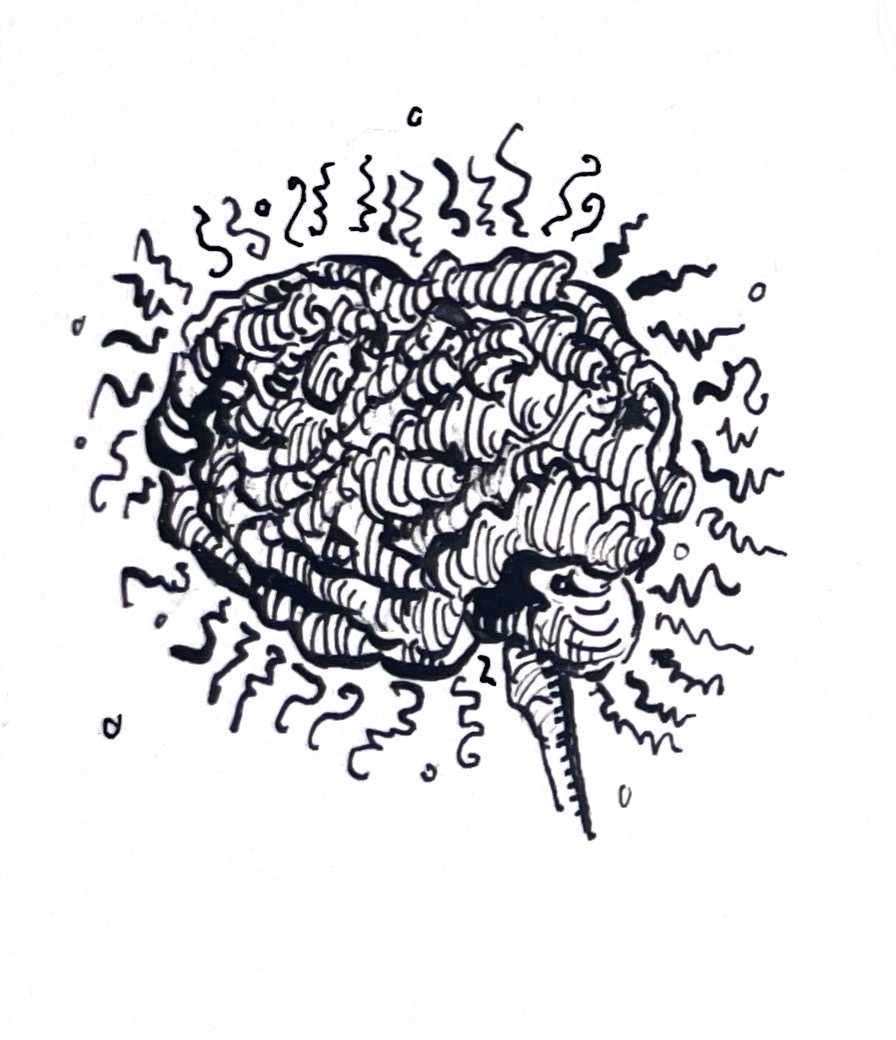
We have all been there. A few pints with friends somehow turns into a night which makes you scared to look over your phone next morning. Snapchat notifications remain unopened, the group chat suddenly feels threatening. And, for reasons you cannot quite recall, your ex’s name is sitting suspiciously high in your recent calls.
Then, along with the headache, comes the investigation.
What did I say? Who did I talk to? And, most importantly, did I embarrass myself?
Sometimes, admittedly, the evidence speaks for itself. But the crushing sense of embarrassment you feel the morning after drinking is not necessarily an accurate measure of just how badly you behaved. It is important to remember that alcohol itself can help create the perfect neurological conditions for anxiety, rumination and that strangely convincing feeling that you have committed some unforgivable social crime. So, before you decide that splitting a few G’s has irreversibly destroyed your social life, it might be worth asking what alcohol has actually done to your brain.
11 pm: When “Maybe I Shouldn’t” Becomes “Why Not?”
Imagine your brain as a car. Our brains work on neurons, brain cells that transmit information constantly firing. What makes the neurons fire depends on the chemical messenger, neurotransmitter balance in our brain. This makes the neurons more likely or less likely to fire. Therefore, we can think of the brain as the car constantly controlling acceleration and braking.
The amino acid glutamate is the brain’s major excitatory neurotransmitter, it pushes the neuronal activity forward. So we can think of it as an accelerator. Following, GABA (γ-aminobutyric acid) is the major inhibitory neurotransmitter. It makes neurons less likely to fire, so in this analogy our brake.
Our brain needs both. You wouldn’t want it to constantly accelerate, but you also wouldn’t want the brake permanently engaged, and alcohol –ethanol – interferes with both sides of this balancing act.
Rather than simply “increasing GABA,” ethanol can also strengthen inhibitory GABAergic signalling in certain neural circuits. At the same time, it suppresses some of glutamate’s excitatory signalling, including activity through NMDA receptors. In our driving analogy, alcohol can therefore make parts of the brain’s brake more effective while simultaneously interfering with the accelerator.
This results in an overall shift towards inhibition, which is why alcohol is classified as a central nervous system depressant. As such, your reaction times slows down, coordination deteriorates and, as you drink more and more, attention and memory begin to suffer. But strangely enough, your behaviour might become less inhibited. Alcohol doesn’t simply turn the entire brain down equally; it also disrupts circuits involved in judgement and behavioural control. So while neuronal activity is being suppressed, some of the systems normally responsible for telling you “maybe don’t do that” are becoming less effective.
And suddenly, calling your ex doesn’t seem like such a terrible idea.
2 am: A Night Not to Remember (Nothing good happens after 2 am)
As night progresses and you drink more, another brain region becomes particularly relevant: the hippocampus. Hippocampus is a brain region that is particularly important in creating and storing memories. This brings us back to our accelerator, glutamate. The N-methyl-D-aspartate receptors (NMDA), which are found in the hippocampus are glutamate receptors and play an important role in neural plasticity and memory formation. Therefore, at high levels of intoxication, like having seven buzzballs or 12 pints, this disruption of receptors interfere dramatically with the formation of new memories (White, 2003). So now we are at a point where your judgment is impaired and your brain is so heavily intoxicated with alcohol that you are unable to have tonight as a memory. This is where the night screams like trouble and leads to a potential blackout.
Blackouts can be fragmentary, leaving scattered gaps in memory that may sometimes be recovered with cues, such as the snaps your friends sent or “Wait, you seriously don’t remember doing that?” questions. Blackouts could also be en bloc, where an entire period of time is missing from the memory in a non retrievable way.
And herein lies one of the perfect ingredients for tomorrow morning’s hangxiety: uncertainty.
4-8 am: System is trying to go back to normal
Eventually, after surviving the night bus home and collapsing into bed, the sweet relief of sleep finally catches up with you. Meanwhile, your blood alcohol concentration begins to fall as your body metabolises the alcohol from the night before.
Unfortunately, passing out the second your head hits the pillow does not necessarily mean you are in for a good night’s sleep. Throughout the night your body is trying to restore the homeostasis, a relatively stable condition for the human body to function healthy.
This process is sometimes described online as a simple “GABA crash” or “glutamate rebound,” but the neuroscience behind it is considerably more complicated. With repeated alcohol exposure, the brain can adapt to alcohol constantly pushing its activity towards inhibition. When alcohol is removed, these adaptations can temporarily leave the nervous system overly active, hyperexcitable, which is why anxiety and restlessness are associated with alcohol withdrawal (Becker et al., 2014). However, an ordinary hangover after a night out cannot be explained by this mechanism alone. Research suggests that the morning-after experience is, instead, a mixture of several processes, including disrupted sleep, alcohol metabolism, inflammation and changes in brain signalling (Palmer et al., 2019).
Therefore, while you are unconscious lying in your bed, unbothered by the damage, your body and brain are having a less peaceful night. By the time your alarm goes off you may find yourself much more uncomfortable than when your head first hit the pillow. And unfortunately, this is exactly when the investigation begins.
10 am: Good Morning Hangxiety
Your eyes open. Headache. Dry mouth. Nausea. Fatigue. Then you remember. Or, perhaps more importantly, you don’t. This is where the physical hangover becomes psychological. “Hangxiety” might sound like something invented in a group chat between friends but recent research shows there is a correlation between being hungover and an increased negative affect in your mood and how some get it worse. Research carried out by Rothman et al suggests that psychological characteristics may actually influence how strongly people experience the negative emotional effects of a hangover. Rothman suggests that greater baseline anxiety, repetitive negative thinking, avoidant coping styles and difficulties with emotional regulation were associated with worse negative affect during hangovers (2026).
This is the part where you really start feeling the effects of staying out till 2, if you suffer from a blackout. You don’t necessarily remember doing something embarrassing. Sometimes you remember just enough to know that you might have done something embarrassing.
You remember entering the pub. You remember meeting someone. You vaguely remember talking to them.
Then… nothing.
Your call history, however, remembers everything.
So, were you actually that embarrassing?
So, were you really that embarrassing last night? Possibly. Neuroscience cannot tell you the story behind whatever is sitting in your sent messages. But the intensity of the shame you feel the next morning is not necessarily proportional to the severity of your crimes. Your sleep-deprived, physiologically stressed, and neurochemically unsettled brain is trying to reconstruct a partially remembered night while simultaneously being unusually vulnerable to negative emotion.
On that note, of course, don’t forget to drink responsibly. But it’s Freshers’ Week, you are in college, and nights are bound to get a little messier than planned. So when morning comes, open the Snapchat. Face the group chat. And maybe, if you’re brave enough, check your call history.
Just remember: everyone else is too busy investigating their own questionable decisions to spend much time thinking about yours and chances are, it wasn’t nearly as bad as your hungover brain is telling you it was

Leave a Reply