
The categorisation of what is “ordinary” is rather contemptuous, although it is invariably presented as a term of democratic affection. The ordinary person is presumed to be the common punter, the representative citizen, the useful individual whose particularities have been effaced until they can be made to signify something larger than themselves. An extraordinarily convenient abstraction, mind you, because once a person has been reduced to what is presumed to be typical about them, there is very little left to account for except their usefulness as an example.
Literature has historically shown a marked preference for people whose significance is presumed to precede them: monarchs, saints, prodigies, the politically disgraced, and the romantically doomed. Even the lives of less distinguished people become respectable subjects for fiction, provided their ordinariness can be made to conceal some distinction. The forlorn boy possesses an unusual sensibility; the bored housewife conceals some great emotional catastrophe; the provincial girl is waiting for her exceptional love worth dying for. The implication is flattering, but also limiting. A life becomes worthy of this sustained attention only when it can demonstrate that it was never truly ordinary after all.
The genuinely unremarkable person presents a more difficult problem. There is no distinction to uncover and no exceptional event waiting to vindicate their value. Their importance cannot be borrowed or achieved. Life is largely the accumulation of habits, prejudices, bodily sensations, memories, irritations, appetites, and thoughts that appear to have no particular claim upon history and yet constitute almost everything that a private life consists of. This is perhaps why “ordinary” is not quite an adequate way of categorising people. A group can be ordinary, a demographic can be ordinary, but an individual is considerably harder to contain within such confines. The moment you know what or who it is that occupies their thoughts, the label begins to lose its usefulness.
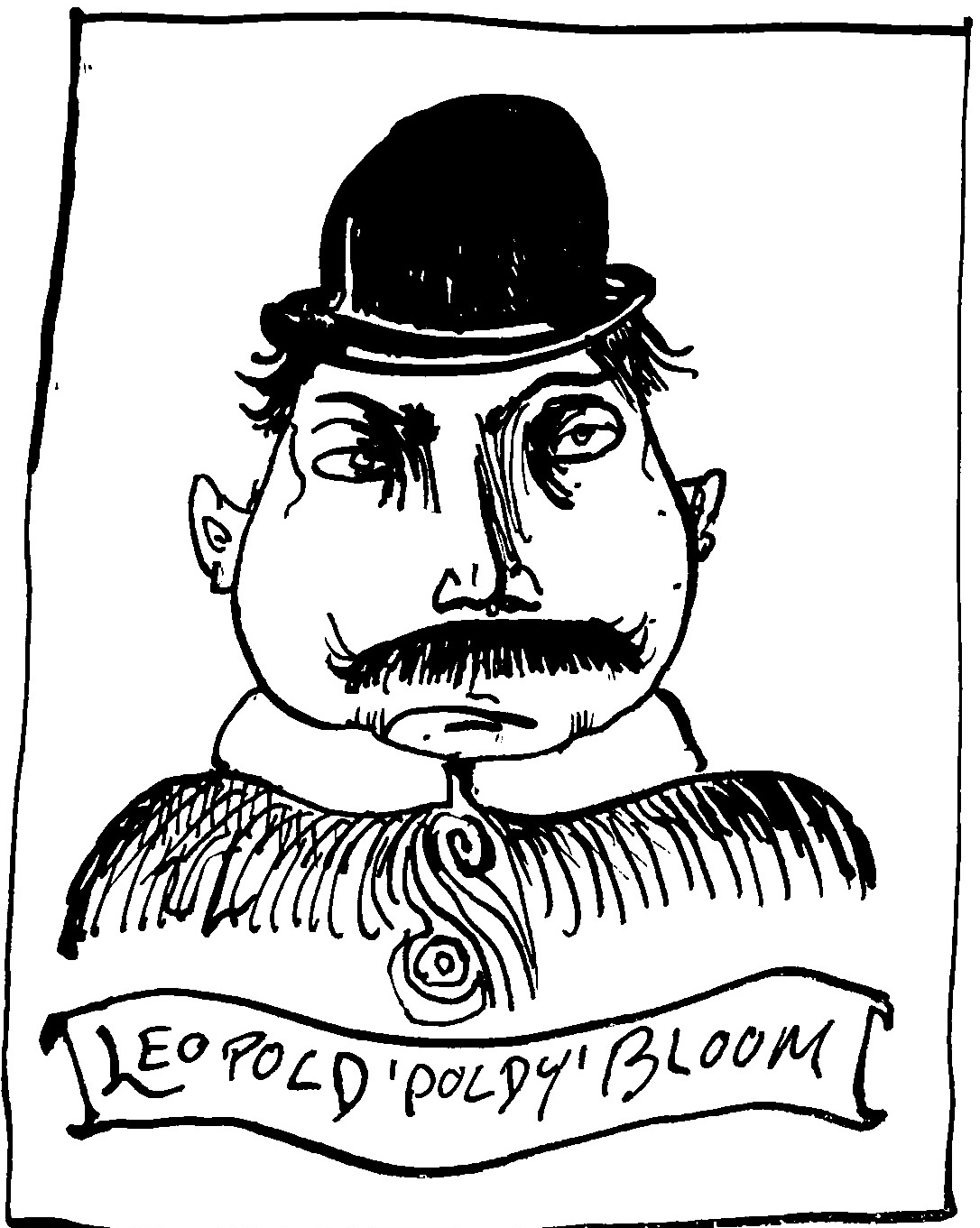
Leopold Bloom is, then, a remarkable example, indeed, one of literature’s greatest. By almost every conventional measure he is unremarkable. An advertising canvasser in Dublin, married to Molly Bloom, whose infidelity occupies a good deal of his consciousness throughout the day. He has lost his father, worries about money, thinks frequently about food, possesses an intermittent curiosity about the world around him, and spends a great deal of time walking from one place to another. He is neither suspiciously powerful nor accomplished, and Joyce gives him none of the attributes by which a literary protagonist might ordinarily be distinguished from the mass of people moving alongside him in the streets.
It is worth separating Ulysses from the tiresome idea that ordinary life becomes valuable only once you learn to romanticise it. There is no need to turn the banal into the beautiful in order to defend its place in literature or life. If you were asked to recount an ordinary Tuesday, you would probably only remember the things which seemed to separate it from every other Tuesday and discard the rest. Yet while it was being lived, the supposedly consequential and the completely forgettable occurred in much the same fashion. One thing happens, then another, and you have no reliable means of knowing which one will follow you home.
That being said, Ulysses does not need to manufacture a more consequential version of Bloom in order to make him interesting; instead, it follows him closely enough that the distinction between consequential and inconsequential begins to seem far less tenable than it did from a distance. Perhaps this is one of the reasons the novel’s relationship with Homer is so useful. The Odyssey is the most famous example of organising a life around extraordinary action. The comic disproportion between the cast of characters is obvious, but what’s underneath is of more interest. Joyce subjects the heroic model itself to a reduction in scale, suggesting that its literary modes need not belong exclusively to the extraordinary. They can be found, too, in the movements of a man who has spent a day doing nothing.
This is part of the larger revolution Joyce and his modernist contemporaries introduced into the hierarchy of literature. The older narrative instinct is selective: it privileges events which advance the plot over those which merely occur in the intervals between such significant moments. Joyce, however, does not grant narrative importance only to what propels the plot. The point of his more exacting method is that the mind moves associatively, involuntarily and rather stupidly.
We tend to construct the self retrospectively, selecting from the disorder of experience those moments which appear capable of explaining what came afterwards. An impulse not without its vanity, given how readily we imagine our lives as a sequence of recognizable chapters, as though we might identify the precise afternoon on which we become a different person. The failed relationship becomes a period of growth. The uneventful summer becomes, somehow, “a simpler time”. We choose to narrate backwards because living forwards offers no indication of which ordinary moment will eventually acquire prominence.
Joyce’s decision in this matter prevents his protagonist from becoming an “everyman”, that rather lifeless literary figure whose principle function is to reassure us that we are all fundamentally alike. Bloom is far from a representative specimen of humanity, and much too peculiar to serve as one. His mind is full of what we generally keep out of polite accounts of ourselves such as, petty grievances or fixations, embarrassing desires, unintelligent opinions, and so on. There is no dignity to having a mind, at least not in the sense that we tend to imagine dignity in literature. The “everyman”is recognizable because he is stripped of the peculiarities that Joyce preserves in Bloom.
I hesitate, however, to deem this inspirational. His life is not a demonstration of how to appreciate the present moment, nor is he some literary patron saint of the mundane. He does not walk through Dublin with heightened awareness that his ordinary existence is secretly meaningful. The importance here is imposed by Joyce’s attention itself, not by Bloom’s own understanding of himself. He does not distinguish, throughout the narrative, between those aspects of his life which deserve our consideration and those which do not.
The banal is therefore not a category of things which possess some hidden profundity. Joyce’s stranger insistence is that the banal does not cease to exist because we have become bored of it. The remarkable thing about Bloom may therefore be that he remains entirely unremarkable.

Leave a Reply