
November 6th.
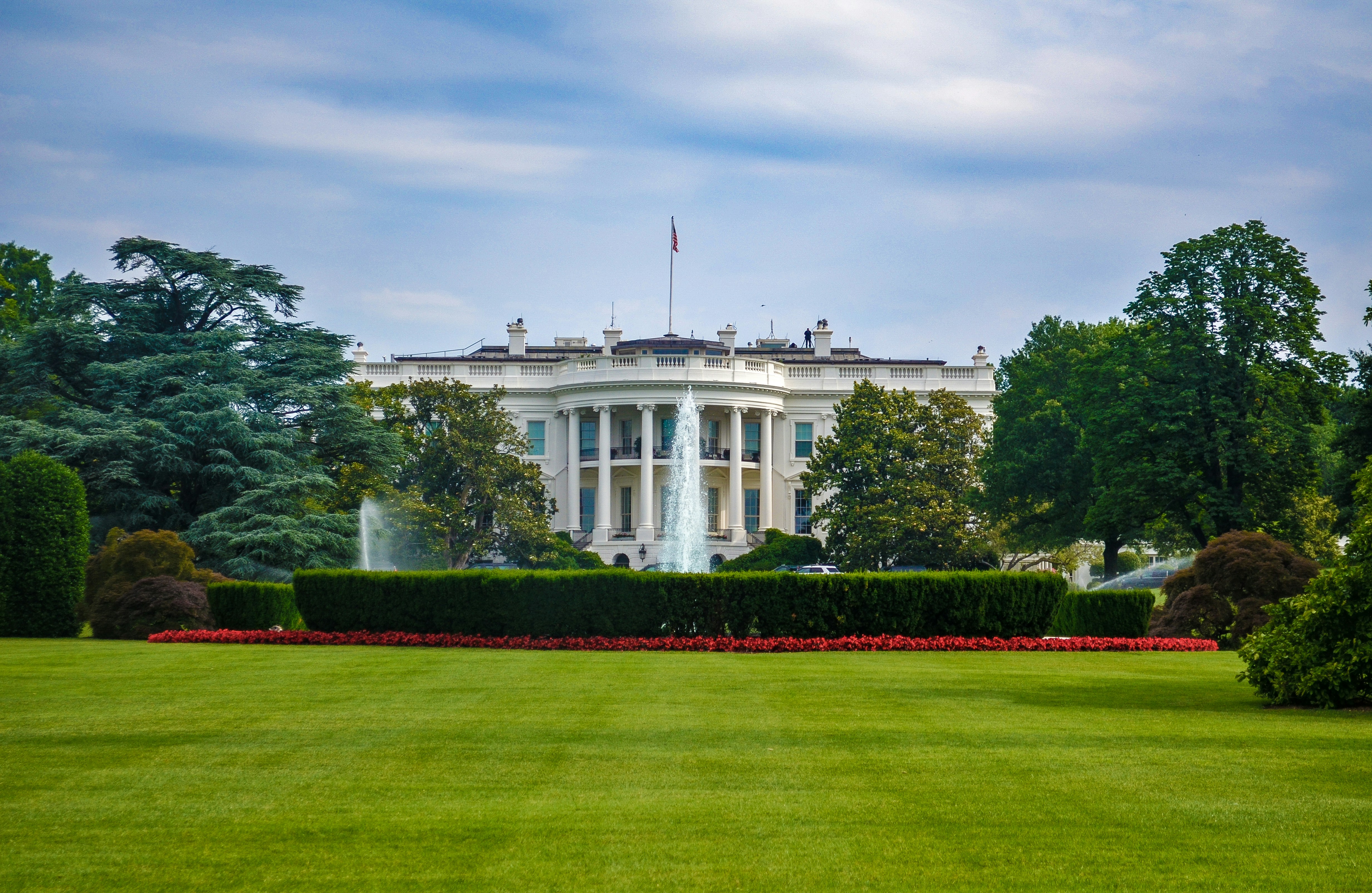
At the heart of Washington DC, two wide expanses of grass intersect in the shape of a cross. The White House is at one end, Capitol Hill at another. In the middle is the city’s most iconic landmark, a towering obelisk that dominates the skyline. This is where I was on the evening of November 6th 2024 – standing alone by the 170-metre-tall structure, under a glowing full moon, surrounded by sardonically waving star-spangled flags. The Washington Monument seemed especially ominous that night.
Despite the previous day’s events, everything in the city appeared as normal – throngs of tourists ambled along the enormous lawn and streamed out of the city’s innumerable museums, businesspeople hurried down the streets. I couldn’t tell if the expressions on their faces seemed more worried than usual. Meanwhile the government buildings stood tall as ever in immovable neoclassical grandeur, invoking ghosts of empires past.
When I tell people I was in DC last semester, there is a very predictable reaction. First, they’re surprised: “Oh, cool!” Then, after a couple seconds: “Oh…” They give me an expectant look, or, if they’re more direct, say “You must’ve been there during the election… How was that?” This has happened to me countless times and yet I’m still lacking a good reply – “intense” is usually the best I can do in casual conversation.
You saw the US election on the news. Future students will probably read about it in books. Neither captures what it’s like to be there. Although simply being in DC doesn’t bestow any unique political insights – we all saw the same events – reading about history is not the same as living through it.
Before.
America is a reality show. It’s a news headline. It’s a dinner-table conversation topic. Before living there, my mind, having ripened in the soil of mass media, found it difficult to conceptualise the US as a real place inhabited by a limitless array of people living unimaginably diverse lives. When Irish people talk about the States they often fail to recognise the gap between their preconceived stereotype of America and its vast actuality.
And yet, each reflects the other: the debates you saw on TV and the speculation circulating on social media were mirrored in real-life conversations I heard (these were, it’s worth noting, mostly between fellow Politics and Humanities students). Memorable running questions in pre-election chat were “Is it really worth voting for the lesser evil?” and “Would he actually do that if he got elected?” Heated discussions surrounded the former question as friends exchanged fire over the ethics of voting third-party or not at all. Politics felt far more life-and-death, the stakes so much higher and the discourse relentlessly passionate. Irish politics seemed almost comfortingly trivial in comparison (this was before our own election).
Charged air filled every classroom and fizzled in the back of the dining hall as anticipation suffused the campus in the week leading up to the election. I couldn’t sense any optimism – although DC, and Georgetown University in particular, where I was on exchange, are majority Democratic – nor fear. Everyone was too uncertain to chance any predictions. There was just anticipation.
During.
“The worst party I’ve ever been to” is a damning title. But the Election Day 2024 watch party is certainly a contender. I don’t need to recount how the mood spiralled as the hours passed, the votes rolled in, the New York Times needle crept inexorably rightwards, the laughter trailed into knowing silence. I’m sure many people reading this had similar experiences.
I can just about recall the 2016 election: staying up to watch the news and waking up to my mum at the table with her face in her hands, then talking about it in school where our understanding extended to the fact that Donald Trump was not a good guy. In 2020, I was a little more aware (had acquired a basic knowledge of swing states), but what I remember most distinctly is how it all felt like a game show. Purely entertaining, endlessly flashing red-white-blue CNN coverage – “KEY RACE ALERT!” – seemed comically inappropriate for what was meant to be their country’s defining political event.
We laughed at the sensationalism this time around but, being in DC, it was impossible to see it all as something distant on a television screen. Engaging in the pre-election discussion, feeling the tension and seeing how close the race actually was meant that the results provoked quite a different feeling for us than for those in Ireland. When I called my parents at 3am they’d just woken up to the news, and were devastated and shocked. But I felt something else – not shock, not even devastation. Something like resignation.
It was long over by 4am. I was on a balcony looking over the DC skyline across the river. I didn’t have many thoughts left; I’d used them all up in fatalistic conversations and even then we could only talk in fragments and aimless predictions. What was there to say? We were powerless.
After.
My American colleagues described a sense of dejá vu in the days after the election. They recalled 2016 too, as an icy shock startling them out of politically unaware sleep. Last year we saw events repeated (first as tragedy…) but 2024 was not the unforeseen shock of Hillary Clinton’s loss. In a way, for those watching closely in the preceding weeks, there were no surprises. As one friend put it, it felt like a reminder.
We knew American politics was spiralling downwards. We knew a Harris presidency would be a continuation of the status quo — of the litany of horrors inflicted by their system. We knew Trump would likely be worse (although I don’t think I realised how much worse). His win felt more than anything like an impossible-to-ignore reminder of America’s unwavering decline – hence the bleak resignation. By “we”, of course, I mean my friends. In the wider community the reactions varied: defensiveness on the part of the die-hard Democrats in my classes who refused to admit their own faults, anger from the left at the Dems’ many failures and at Biden’s pure egoism, and mostly just persistent melancholy. Quiet celebration from the MAGA supporters I’m sure, but they didn’t tend to reveal themselves in Georgetown’s majority-blue environment.
A few weeks later, just after Thanksgiving, I was conversing with a man about the US economy, commiserating on the oligarchic state of things. Then he said, with casual confidence, “But of course, Trump’s gonna fix all that.” I couldn’t even be outraged. I simply felt stunned, left to issue a weak reply about Elon Musk that I knew was a hopeless effort. It stuck with me though – the direct contact with such cognitive dissonance.
I experienced something like cognitive dissonance in the weeks after the election, too. Mentally, I was split between the horrors of world-historical events and the demands of daily life: essays, exams, lunch, laundry. Between the downward spiral of despair on election night and the mundane reality that we have to get up for class tomorrow. I didn’t end up going to my morning class, ironically titled Campaigns and Elections – I couldn’t face the crushing atmosphere. But “Sorry, I can’t submit this essay as the world is collapsing into senselessness and fascism,” doesn’t really cut it…
To my friends back home I once described living alone in a new city as a “series of casually beautiful places”. DC remained beautiful during the election and afterwards. Autumn leaves and art galleries and city lights, endless wonder in my daily experiences against the backdrop of America’s immense natural beauty. In painfully dissonant contrast: the looming black hole of Trump’s second presidency, the systemic police violence, the knowledge that inside the splendour of Capitol Hill the impossibly rich and powerful were bankrolling Israel’s genocide while one in ten Americans live in poverty. Violence simmering in the bricks of the city, flowing in highway-arteries across the country. Blood and concrete and neon and oil.
I felt an especially keen sense of dissonance in the fact that I was studying at Georgetown University. Georgetown is its own secluded world, wreathed in privilege, which is partly why my own experience of the US is so limited. There, I was surrounded by power and wealth beyond anything I’d seen at Trinity: the next generation of Democratic Party lackeys, foreign policy advisors, members of Congress, future politicians and spies and war criminals.
I also felt the dissonance in the question on so many people’s minds: “How can half of the country have voted for this guy?” A country so filled with utopian ambition, with passion, with life. And, in its endlessly multifaceted and surprising nature, so corrupt, ignorant of its own flaws, overflowing with greed, incubating such deep hatred.
These feelings lingered through December as the semester came to an end and I prepared to abandon the United States to its fate (to put it a little melodramatically). It was a bit surprising how quickly everyone around me moved on. A depressing week, then everyday life regained its total dominance and the news cycle spat out new events and new images. There was Thanksgiving, and then the UnitedHealthcare shooting took over every conversation for a couple of days in December. People didn’t talk about the election much, but it was there, smouldering in the background, a lit fuse steadily burning down to Inauguration Day.
I got out just in time, as many people have noted, so I don’t know what it felt like to be there then – a friend said he just rotted in bed for the day. Fair. Here in Dublin, we’re all getting a taste of the awfulness, reading those daily headlines from a parallel dystopian world.
I can’t pretend to know what happens next in America. I’m left with a profound sense of powerlessness. I didn’t think too much about why I chose to go to DC, but I suppose I saw it as somewhat of a once-in-a-lifetime opportunity – to be there as a politics student, in the epicentre of United States power, at a pivotal moment in history. For now, the only knowledge I can take from the experience is of being caught up in senselessness beyond my comprehension. It’s a senselessly big country, it’s a senselessly cruel system, it’s a senseless world. At least here I feel a certain optimism about our hopes for progress, despite the gloomy plateau we’re currently suspended in. I’m more grateful for Ireland, I can’t pinpoint exactly what but I think we have something – a sense of community, an awareness of history, a feeling of unity perhaps – that America lacks. But we must not be complacent. Fascism is an ever-growing threat even here and, as Lincoln insisted, “It is for us the living… to be dedicated to the great task remaining before us.” It is for us to ensure that what has happened in the US doesn’t happen here, and to wish our friends across the ocean the best of luck.

Leave a Reply