
Since the brutality of October 7th 2023, the Israel-Palestine conflict has remained at the forefront of Irish political discourse and community life. However, responses to the conflict in Ireland cannot be discussed in isolation.
While Ireland has repeatedly demonstrated support for Palestine and protested against Israel’s occupation of Palestinian land, other European countries have responded with varying degrees of urgency – some slower to condemn Israel’s actions, others outwardly refusing to recognise the crimes being committed.
Trinity has long played a prominent role in student-led solidarity with Palestine. In May 2023, it was one of several universities to organise a protest encampment demanding the severing of institutional ties with Israel. Nicknamed the “student intifada,” this wave of activism emerged partly in response to the mass arrests of anti-genocide protesters at Columbia University.
The global landscape of anti-Palestinian government actions and corporate complicity has shaped Irish responses to the violence in the Middle East. It often appears as though Ireland exists in its own distinct bubble, one where pro-Palestinian sentiment is not only common but overwhelmingly dominant.
Every year, hundreds of Erasmus students arrive at Trinity, bringing with them a wide range of cultural and political backgrounds. While adjustment has always been a part of studying abroad, rarely have political differences across Europe been as stark as they are today. Contrasting national responses to the Israel-Palestine conflict have echoed through the halls of governments, and penetrated university classrooms.
One German student who recently completed her exchange at Trinity described a noticeable contrast between the environment in Dublin and that of her home university, Ruhr Universität Bochum (RUB). There is perhaps no other European country as deeply entangled, emotionally and politically, in the hostility than Germany. Its contemporary foreign policy remains inseparable from the legacy of the Second World War. Between two Irish citizens being threatened with deportation, and videos circulating of Irish demonstrator Kitty O’Brien being violently assaulted by police at a demonstration, Ireland has become hyper-aware of the mistreatment of pro-Palestinian demonstrators at the hands of German law. Disturbance at their government’s unrelenting support for Israel has similarly spread across Germany. As the conflict has escalated, public expressions of support for Palestine have gradually become more acceptable on college campuses, such as RUB. While the university showed openness to on-campus pro-Palestinian campaigns, the Trinity exchange student noted that Ireland’s discourse remained more visible and outspoken. Like many Germans, she expressed frustration at her government’s reluctance to act decisively, an attitude she felt was tied closely to Germany’s fraught historical legacy.
For many exchange students, the culture shift is immediate. Europe’s responses to the genocide vary drastically, shaped by history, ideology, and, increasingly, the rise of the far right.
Beyond Germany, political shifts continue to shape national responses. The Netherlands has similarly seen its internal politics sway rightwards in recent years. As of September 2025, 65 percent of Dutch citizens reported dissatisfaction with their government’s handling of the crisis. After Geert Wilders’ far-right party withdrew from the coalition government, a snap election saw Rob Jetten’s socially liberal D66 party come to power. Having criticised Israel’s actions and supported President Macron’s recognition of Palestine, the new government may signal a more assertive stance toward Netanyahu’s administration.
Across two semesters, many Trinity students experienced these differences firsthand. For students leaving a visibly pro-Palestinian environment such as Ireland for countries like Germany or the Netherlands, the shift could be stark. We talked to four students who navigated this alteration.
One student studying in Göttingen, Germany, described a palpable tension between young people’s calls to end the genocide in Gaza and the stronger pro-Israel sentiment among older generations. Despite Germany’s official stance in support of Israel, many student cities – Göttingen among them – showed frustration at their government’s complicity in the violence. Though support for Palestine was less visible than in Ireland, protests drew significant crowds, leaflets were distributed, pro-Palestine graffiti appeared, and fundraisers were organised to support humanitarian aid.
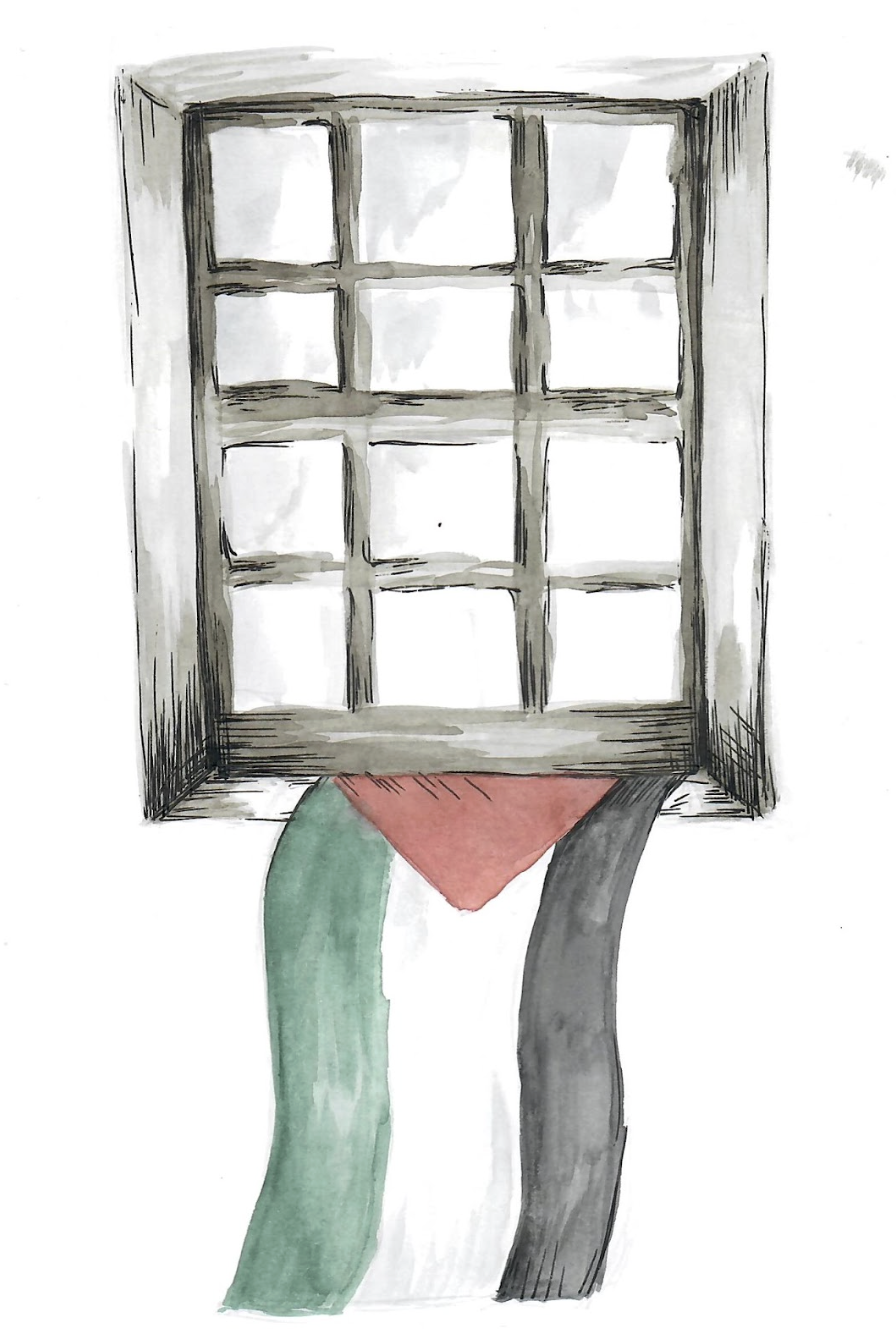
Students in the Netherlands, the Czech Republic and Austria reported differing experiences. A student at a liberal arts college in Utrecht described an environment overwhelmingly supportive of Palestine. Palestinian flags, posters, and slogans lined house windows and public buildings, creating a cityscape marked by visible solidarity.
In contrast, a Trinity student in Prague noted that pro-Palestinian sentiment appeared mostly among other international students. She described a noticeable shift the moment she left Ireland, a reminder of how dramatically perspectives can vary across Europe. Similarly a student in Salzburg observed a quieter support for Palestine among Austrian locals and students in comparison to that in Ireland. She recalled how the majority of students expressed pro-Palestinian sentiments through social media, and how lectureres would often condemn Israel if the topic arose in class. However, no demonstrations were held in the town during her exchange, and few posters or flags of solidarity were flown across Salzburg.
The varied responses of students to Israel’s genocide in Gaza has had diverse impacts on university campuses across the continent. Irish students have brought Pro-Palestinian opinions abroad, and international students have witnessed the dedicated degree to which Ireland supports Palestine.
The Erasmus Programme has enabled students across the continent to share their unique cultural values and experiences for generations. Although Trinity students encountered vastly different opinions towards the genocide while on Erasmus, collectively, their individual experiences illustrate that contrasting views can have positive impacts. Today, it is essential that students around the world use their collective political influence to ensure universal atrocities are protested against and eradicated. In the context of the current genocide in Gaza, university exchange programmes have perhaps never been as vital.

Leave a Reply