
As the evenings grow longer, and fun nights out turn into late nights in the library with the looming presence of academic burdens, unhinged murmurings erupt among students. Eyes turn to Tringe and loyal friends for safe ears to share wicked thoughts. Gossip is nothing new and it always spreads fastest when anxieties are high.
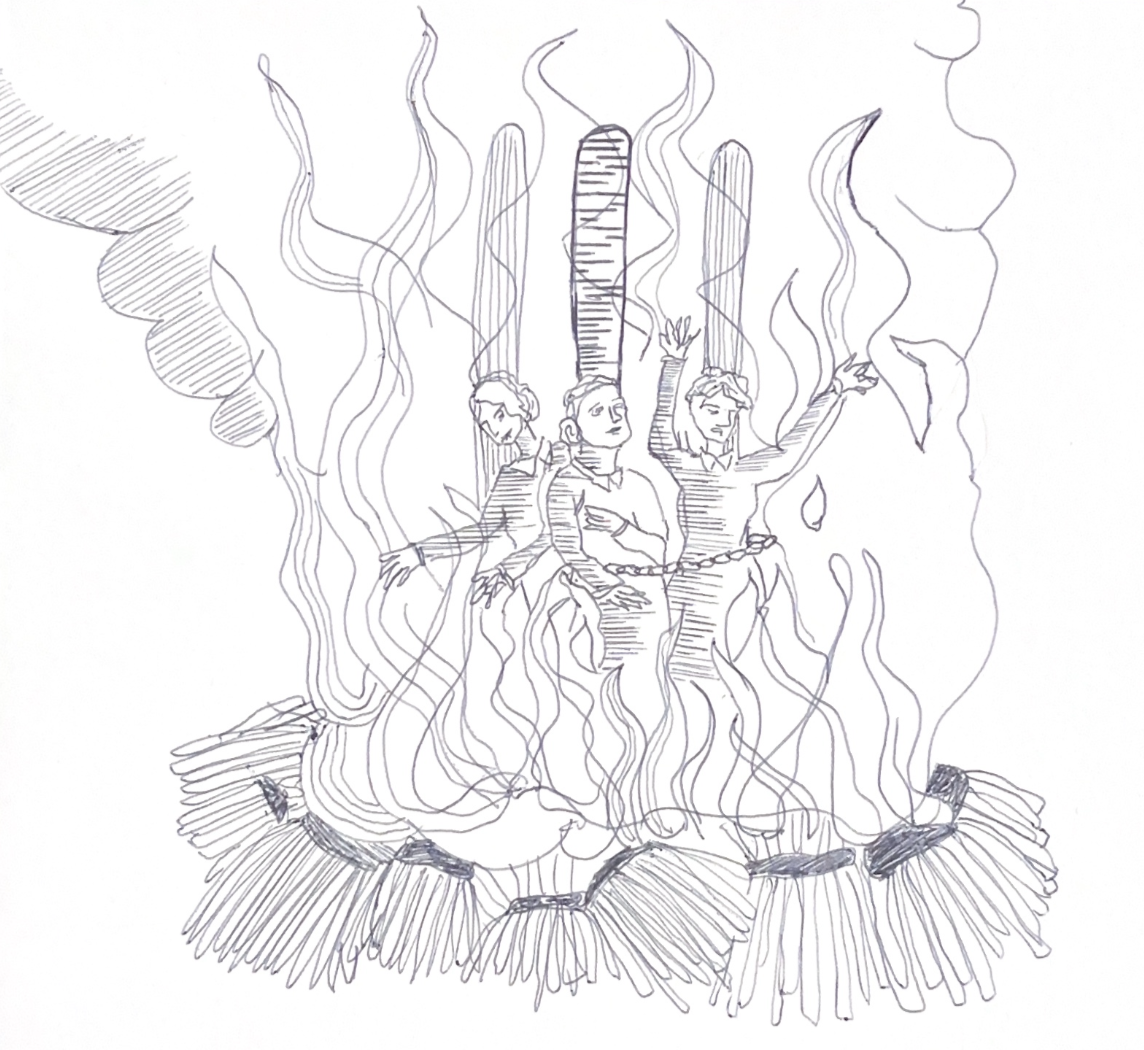
In 1692, Salem, Massachusetts was an anxious community of its own, existing as a tense and fearful Puritanical group. Puritans believed the Devil to be an active part of everyday life and connected witchcraft to naturally occurring devastations such as livestock death, crop failure, and illness. When fear is that widespread, a whispered suspicion can become a tragedy. To set the scene leading up to the trials, the community dealt with political instability, frontier violence, local feuds, harsh winters, and disease. When five young girls, ages nine to 18, began to experience convulsions and contorting postures, doctors could not find a natural explanation for the cause of such symptoms. The only possible explanation was bewitchment.
When questioned under pressure, the young girls accused three marginalised women as the cause for their unexplained symptoms. The witch accusations created mass panic and an avalanche of accusations. Over 200 people were accused of witchcraft over the course of the trials (1692-1693) and 19 were convicted and hanged. While it may be compelling to think of these women as witches haunting their fearful village, the human desire for an explanation leads us to scientific theories behind the girls’ symptoms. Diseases with convulsion-like symptoms, such as ergot poisoning, epilepsy, encephalitis, and Lyme disease, have all been hypothesized. However, the pattern of spread argues against disease: none of the first five girls lived together, and their families were unaffected. Modern thinkers point to psychosocial explanations, in which stress and social expectations produce real physical symptoms without disease.
One explanation is conversion disorder, or functional neurological disorder (FND), in which psychological distress produces neurological symptoms such as convulsions or paralysis that clinical testing cannot explain. FND is linked to disrupted neurotransmitter signaling that dysregulates the body’s motor and sensory pathways. It occurs more often in women than in men and fits the girls’ symptoms, as they lived in a community of fear and hardship leading up to the trials. To explain what earlier historians called “mass hysteria”, mass psychogenic illness describes the spread of real physical symptoms through social contagion, triggered by stress.
In a Puritan community anxious that the Devil had always been among them, built-up stress erupted when the five young girls showed “bewitched” symptoms. The idea of girls possessed by the Devil spread through the community, heightening existing stress and producing tremors, tics, and fainting. This vicious cycle of mass panic, in which everyone feeds into each other’s fears, ends when an authority figure, such as a doctor or politician, intervenes.
In Salem, the governing court was dissolved after accusations reached people of too high a status, including the governor’s wife, and shortly after, the panic subsided. Many women experiencing shared stress from their environment were put to death after experiencing neurological dysfunction symptoms.
While social expectations and cultural beliefs played a massive role at this point in history, it is perplexing to see the depths people will go to for an explanation, even if it’s as irrational as seizures being caused by bewitchment. Shared stress, or contagious stress, is a very real thing amongst us. In 2014, Engert and his team showed that observing another person undergoing a stress test can elicit physiologically significant contagious stress on a neuroendocrine level. A neuroendocrine level refers to the neuroendocrine cells which are widespread throughout the body and link the nervous system to the endocrine system, or the hormone-producing system, responding to neurotransmitters by releasing hormones. In a later paper in 2019, Erkens and team found an increase in observers’ self-reported stress from pre-stress test to post-stress test. This showed that both endocrinological levels and affective stress reactions are elicited by observing a stressed target.
Being in close proximity with people who are stressed can activate our own endocrine system to produce hormones like cortisol in response to that stress, making us feel like we share their burden. Many of us may have felt shared stress during Covid-19 while in close quarters with others who felt stressed. Contagious stress is observed at both the hormonal and psychological level. The women in Salem accused of bewitchment were likely to be sharing stress, linking back to functional neurological disorder. I’ll leave you all with a reminder that untended stress can cause real physical symptoms and it’s important to relieve yourself of stress from time to time. As we approach exam season, take walks along the beach, watch a movie with your roommates, go dance the night away at Hogan’s; take care of yourself because stress can only get you so far.

Leave a Reply